AI tools for education are transforming both sides of the classroom simultaneously — what teachers spend their time on and how students actually learn — and the transformation is happening faster than most educational institutions have been able to develop frameworks to manage it. The stakes are high in both directions: the right AI tools, used well, make education more personalised, more accessible, and more effective; the wrong uses undermine the learning process and academic integrity in ways that have lasting effects on what students actually know and can do. For a broader walkthrough, our AI Tools for Every Industry is a good next read.
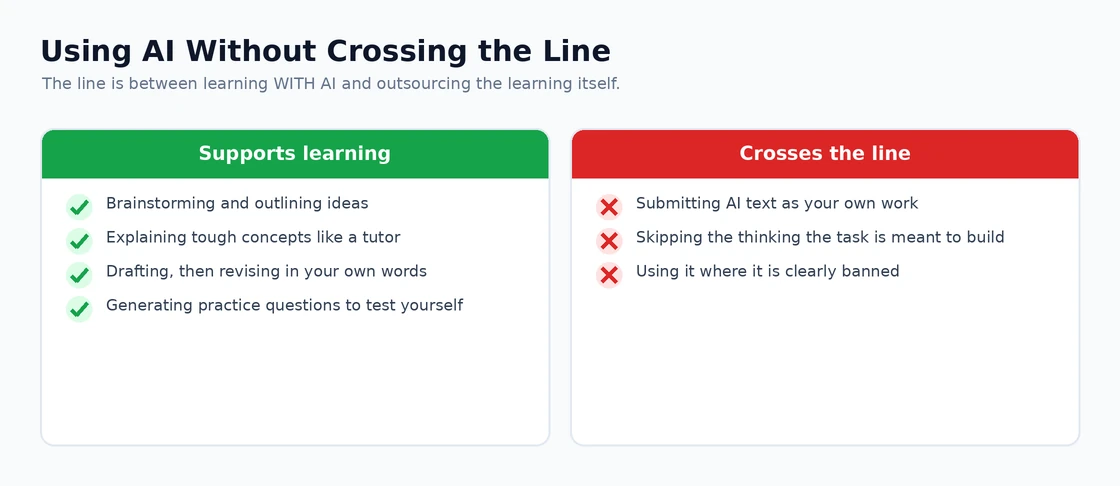
The organising principle I apply to AI tools in education: the best uses make learning more effective, not easier to avoid. AI tools that help teachers personalise instruction, identify struggling students earlier, and reduce administrative overhead free up more time for the teaching that AI cannot do. AI tools that help students understand material more deeply, get targeted practice, and receive immediate feedback improve learning outcomes. AI tools that allow students to bypass the cognitive work of learning — producing work that looks like understanding without actual understanding — are harmful regardless of the short-term convenience.
Best AI tools for teachers and educators
MagicSchool AI (free for teachers) is specifically designed for educator use and has become one of the most widely adopted AI tools among teachers in 2026. It provides over 60 AI-powered tools for teacher tasks: generating lesson plans from curriculum standards, creating differentiated versions of the same content for different learning levels, producing quiz questions and assessment rubrics, drafting parent communications, writing report card comments, and generating IEP (Individualised Education Programme) documentation.
For teachers who spend significant time on administrative and planning tasks, MagicSchool AI’s purpose-built approach addresses actual workload without requiring teachers to learn general AI prompting techniques. The education-specific context baked into each tool means the outputs are appropriate for classroom use in ways that general AI outputs often aren’t without significant editing.
Diffit (free tier available) focuses specifically on reading comprehension materials — adapting any text to different reading levels, generating comprehension questions, creating vocabulary lists, and producing graphic organisers. For teachers differentiating instruction for students at different reading levels within the same class, Diffit’s ability to take a single text and produce five different reading-level versions in minutes addresses a task that was previously enormously time-consuming. The quality of adapted texts is consistently good across subject areas.
Claude and ChatGPT (both have free tiers) remain broadly useful for teachers comfortable with general AI tools — generating curriculum materials, planning units, creating discussion questions, adapting content for different audiences, and drafting communications. For teachers who want maximum flexibility rather than purpose-built education features, general tools with good prompting cover the same ground as education-specific tools. The education-specific tools are more accessible for teachers who are less experienced with AI prompting and want to get useful outputs without a learning curve.

Best AI tools for student learning
Khan Academy’s Khanmigo (available through Khan Academy, free for students) remains the gold standard for AI tutoring in education because it is designed from the ground up to support learning rather than to do work for students. Khanmigo uses a Socratic approach — asking guiding questions rather than providing direct answers — that develops student understanding rather than bypassing it. When a student is stuck on a maths problem, Khanmigo asks “What do you think the first step should be?” rather than showing the solution. This approach is educationally appropriate in a way that asking ChatGPT for the answer is not — the distinction is not about the technology but about what the tool is designed to do.
NotebookLM (Google, completely free) is the AI study tool I recommend most consistently for students, and for the same reason I recommend it in other contexts: it works from the content you provide rather than generating plausible-sounding content from general knowledge. Upload lecture notes, textbook chapters, and course readings, and NotebookLM answers questions, generates study guides, and explains concepts — all grounded in the actual course material. The audio overview feature, which generates a podcast-style discussion of uploaded material, is an unexpectedly effective study tool for auditory learners and for reviewing material in a different mode without additional reading time.
Photomath and Wolfram Alpha for STEM subjects are AI-powered problem-solving tools that show their working — making them genuinely educational rather than just answer-providing. Wolfram Alpha in particular shows the complete solution process for mathematical and scientific problems, which means using it to understand how to approach similar problems is legitimate learning support. Using it to copy answers without engaging with the process is not. The distinction is in how the student uses the output, not in the tool itself.
Best AI tools for educational institutions
Turnitin with AI Detection is the most widely deployed tool for academic institutions managing the integrity dimension of AI tool use. It detects both plagiarism from existing sources and AI-generated content, providing educators with a signal that submitted work may not be authentic student work. The appropriate use is as one signal among many rather than as definitive proof — the false positive rate is real and consequential, and institutions need clear policies on how detection results are used before deploying these tools. AI detection results should prompt a conversation, not an automatic consequence.
Gradescope (pricing for institutions) uses AI to assist with grading — grouping similar student responses together so instructors can grade each answer type once rather than individually, applying rubric criteria consistently, and providing feedback more efficiently on high-volume assessments. For large classes where assessment feedback is bottlenecked by grading volume, Gradescope’s AI-assisted approach reduces the time cost without reducing the quality of feedback students receive.
Academic integrity — a direct discussion
No guide on AI tools in education is complete without an honest discussion of academic integrity. The AI tools most useful for student learning — NotebookLM, Khanmigo, Wolfram Alpha — are also easily distinguished from the tools most commonly used to enable academic dishonesty: general AI assistants that write essays and solve problems on request.
Simple prohibition of AI tools doesn’t address the reality that students are using them and will continue to do so. The most effective institutional approaches I’ve observed are more sophisticated:
- Redesigning assessments to require demonstrated understanding that AI tools cannot fake — oral defences, process portfolios, in-class components, tasks requiring application to specific class discussions that AI has no access to
- Establishing explicit and nuanced AI use policies that distinguish appropriate from inappropriate use rather than blanket prohibitions that students recognise as unenforceable
- Teaching students explicitly about AI tool limitations so they understand why developing their own capabilities remains necessary even in a world with AI tools available — and why using AI to bypass the development of those capabilities harms their own future prospects
The academic integrity problem with AI tools is not primarily a detection problem — it’s a motivation problem. Students who use AI to do their work rather than to support their learning are making a choice about what they want to get out of their education. Addressing that choice requires understanding why they’re making it, which is an educational and institutional design question more than a technology question.
AI tool reference for education
| Tool | Best for | Cost | Integrity appropriate? |
| MagicSchool AI | Teacher lesson planning and admin | Free for teachers | Teacher tool — N/A for students |
| Diffit | Differentiated reading materials | Free tier | Teacher tool — N/A for students |
| Khanmigo | Student tutoring via Socratic method | Free via Khan Academy | Yes — designed to support learning |
| NotebookLM | Student study from course materials | Free | Yes — grounded in student’s own materials |
| Wolfram Alpha | STEM problem solving with steps shown | Free basic tier | Depends on use — learning from process yes, copying answers no |
| General AI (ChatGPT, Claude) | Various student and teacher tasks | Free tier | Depends entirely on use and institutional policy |
| Turnitin with AI Detection | Institutional integrity assessment | Institutional licensing | One signal among many — not proof |
| Gradescope | Grading efficiency for large classes | Institutional pricing | Teacher tool — reduces grading time |
The teacher’s time dividend from AI tools
For the teachers who’ve adopted AI tools most successfully, the consistent theme is using reclaimed time differently rather than just reducing total working hours. A teacher who uses MagicSchool AI to generate a week’s worth of lesson plan drafts in two hours instead of six doesn’t necessarily work two fewer hours — they use the four recovered hours for the teaching activities that AI tools cannot replicate: relationship building with students, direct intervention with struggling learners, professional collaboration with colleagues, and the kind of reflective preparation that improves teaching quality over time.
The teacher’s professional value is not in generating lesson plans — any sufficiently capable AI can do that adequately. The professional value is in the judgment, the relationship, the presence, and the responsive adaptation that happens in a room with students. AI tools that reduce the administrative overhead of teaching make more time available for those irreplaceable human elements — if the time is actually redirected rather than absorbed by additional administrative work.
Our guide on best AI tools for students covers the student-specific tools with more detailed guidance on academically appropriate uses. Our guide on ethical use of AI tools covers the disclosure and integrity principles that apply to academic contexts alongside the professional ones — including the difficult question of where the line falls between legitimate AI assistance and work that misrepresents the student’s own contribution.
AI tools for special education and accessibility
One of the most consistently underreported applications of AI tools in education is support for students with learning differences and accessibility needs. Several AI capabilities are particularly relevant here:

Text-to-speech and reading support: AI tools that read text aloud and handle complex vocabulary are increasingly accessible. For students with dyslexia, visual impairments, or processing differences that make traditional text-based reading challenging, AI-powered reading support can reduce the barrier to engaging with standard educational materials without requiring separate accommodated materials for each piece of content.
Simplified language versions: Diffit’s reading level adaptation and similar tools can produce simplified versions of any text without loss of core content. For students with intellectual disabilities or English language learners, having access to grade-appropriate content at accessible reading levels removes a barrier that previously required significant teacher time or specialised materials to address.
Real-time speech-to-text: AI-powered transcription tools that convert speech to text in real time support students who find typing difficult, students with physical disabilities affecting writing, and students with processing differences that make the simultaneous demands of thinking and writing challenging. Students can verbalise their thinking and get accurate text output for editing — separating the thinking and the writing mechanics in a way that supports both.
Personalised pacing: AI tutoring tools like Khanmigo can work at genuinely individualised pace — spending more time on concepts a specific student finds difficult and moving faster through concepts they’ve mastered. This personalisation at scale is extremely difficult for a single teacher managing a class of 30 students, but trivially easy for an AI system working with one student at a time.
Teacher professional development and AI literacy
For teachers, understanding AI tools well enough to make good decisions about when to use them, how to teach students to use them appropriately, and how to redesign assessments that remain meaningful in an AI-accessible world — this is the professional development priority of the current period, not just an optional extra.
The teachers who will be most effective in the next five years are not necessarily the ones who use the most AI tools. They’re the ones who understand AI tools well enough to make informed choices about when to use them and when not to — who can evaluate AI-generated content for accuracy and appropriateness, who can explain to students why specific AI uses do and don’t support their learning, and who can redesign their practice to maintain educational integrity in an environment where AI tools are a permanent and increasingly capable presence.
That professional capability is worth investing in through formal professional development, peer learning with other educators, and direct experimentation with the tools in low-stakes contexts before deploying them in high-stakes teaching settings. The educators who wait until they feel completely confident before engaging with AI tools will find themselves managing student AI use without the understanding needed to do so effectively.
AI tools for education are not going away, and the question is not whether to engage with them but how. Educators, students, and institutions that develop thoughtful, evidence-based approaches to AI tool use will be better positioned to capture the genuine benefits — personalisation, efficiency, accessibility — while managing the genuine risks, including academic integrity and the risk that convenience substitutes for the harder cognitive work that learning requires. That requires active engagement with these tools, not reluctant tolerance of their existence. Our guide on Best AI Tools for Healthcare covers an adjacent issue.